Boost your production
with robust industrial furniture

Ellan
Boost your production
with robust industrial furniture
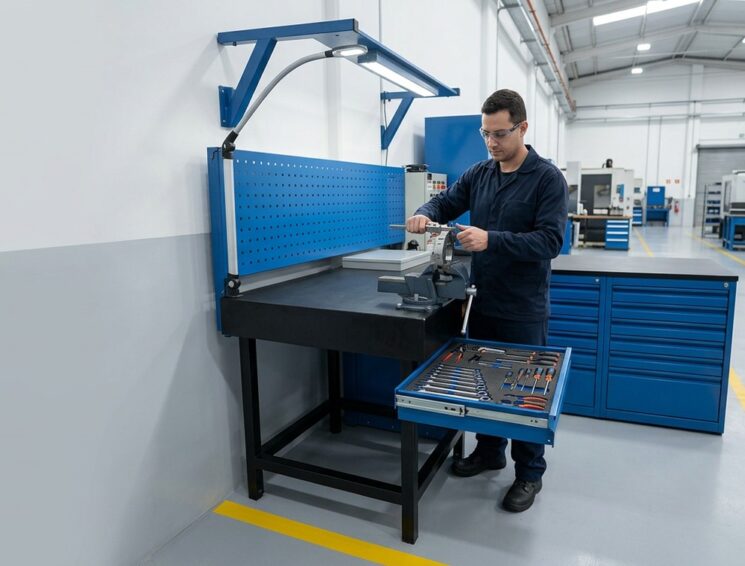
If you’re an industrial manager, you’ve probably already blamed the operator for rework. Lack of attention, carelessness, haste… But what if the error doesn’t originate with the operator? What if it originates earlier? In the workbench that doesn’t secure the part, in the disorganized drawer that causes the employee to pick up the wrong tool, in the poorly positioned lighting that hides a critical detail?
This article will show you that rework is often a consequence of the environment, and that the right furniture can be the key to an operation that minimizes errors.
Talk to a specialist and discover how to reduce rework in your factory
Most managers associate rework with human error. But look closer:
(Insert image showing the errors described below)
The operator does the best they can with the infrastructure they have. But when the infrastructure fails, they pay the price, and rework becomes routine.
What the right furniture does
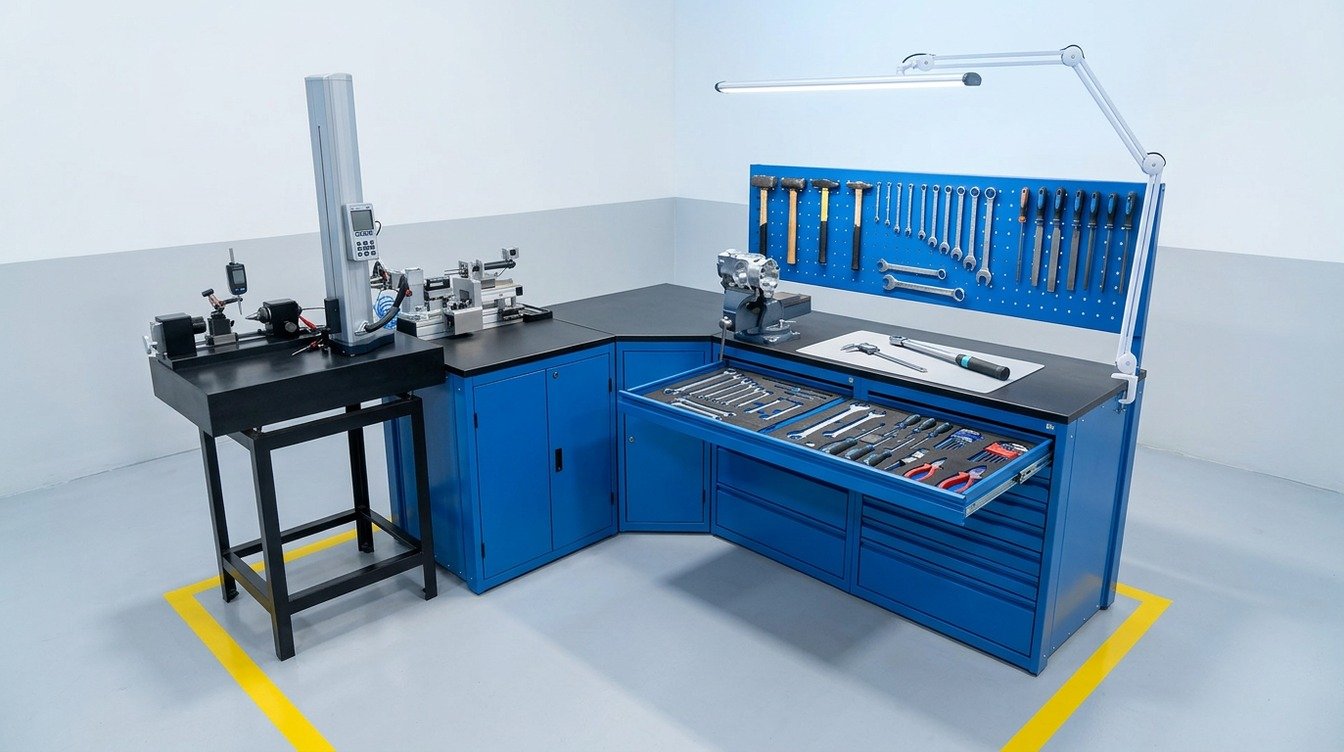
When furniture is designed for the process, rework decreases. Why?
Visual references: Lines, markings, labels. The operator knows where each step begins and ends. Process variability decreases. Consistency increases.
Reducing rework isn’t just about “making fewer mistakes.” It’s about:
Greater customer satisfaction.
The right furniture pays for itself: in less rework, less waste, and more consistency.
If you want a factory floor free of rework, start with the environment. Look at your workbenches, your drawers, your lighting. Ask yourself: “Is this furniture helping my operator get it right or making it easier for them to make mistakes?”
The operator isn’t the problem. The environment they use might be.
Ellan designs industrial furniture that eliminates variables that generate errors. Workbenches that secure the workpiece. Drawers that organize tools. Lighting that highlights the detail. Ergonomics that reduces fatigue.
Your rework can be reduced and your quality can increase.
Talk to an Ellan specialist and increase your industry’s productivity.


Boost your production
with robust industrial furniture