Set up your functional work area
with Ellan technical furniture

Ellan
Set up your functional work area
with Ellan technical furniture
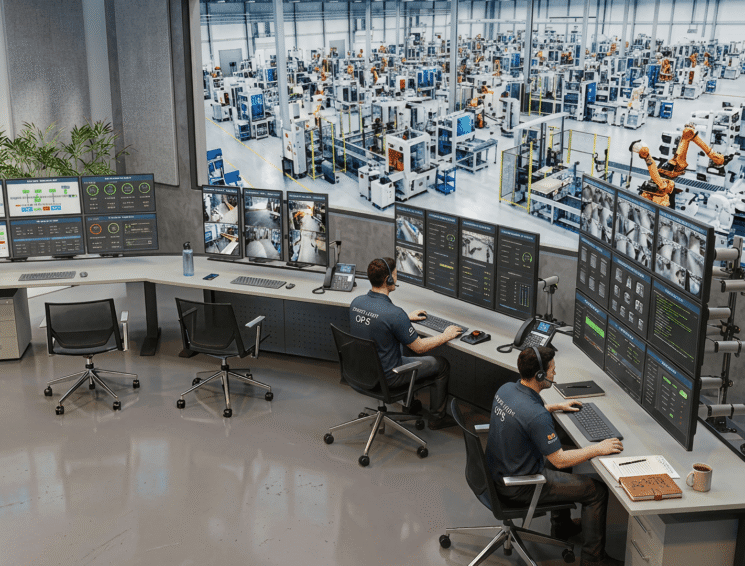
A control room is the nerve center of critical operations. Whether it’s monitoring urban traffic, managing power grids, ensuring property security, or controlling industrial processes, the performance of this environment directly impacts the quality of decisions and the safety of operations.
However, it is common to find control rooms designed without due attention to human, ergonomic, and functional factors. Small errors can lead to significant efficiency losses over time, and many of them could be avoided during the design phase.
Below, we list the 7 most common errors in control rooms and what to do to correct them (or, even better, prevent them).
When operators start complaining of body aches and staff turnover increases, it’s a strong indication that ergonomics have been neglected. In long operations, a professional with physical discomfort takes longer to react to an alarm or may misinterpret critical data, and the cost can be high.
The good news is that the guidelines already exist: standards such as NR-17 guide the design of control centers with a focus on the human factor. They recommend, for example, monitors with adjustable height (with the top of the screen at eye level), eye-to-screen distance between 50 and 70 cm, seats with lumbar support, and the possibility of alternating postures throughout the shift.
In practice: Support systems for monitors and technical desks with height adjustment.Systems like those we developed at Ellan allow each operator to personalize their workstation, alternating between seated and standing positions throughout the day.
Read also: Ellan Operational Solutions: custom-made consoles and furniture
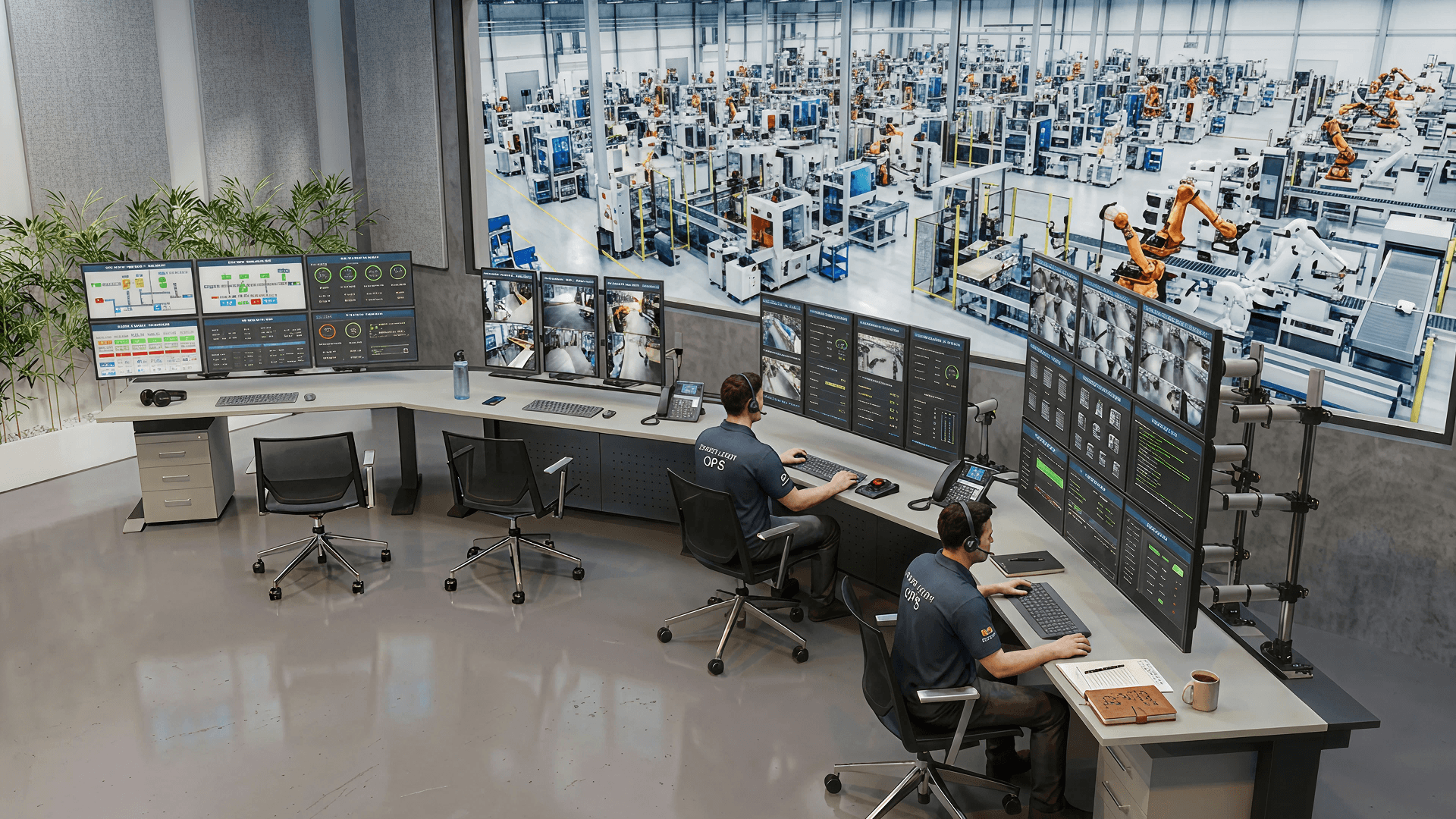
Reflections, backlighting, and poorly positioned light sources strain the eyes, increase fatigue, and… In critical moments, they may hide precisely the most important information.
The correct approach involves a controlled, indirect lighting design, with light fixtures positioned parallel to the operators’ lines of sight. Matte surfaces on furniture and walls also help reduce unwanted reflections. And pay attention to natural light: it’s welcome, but it should never shine directly on the screens.
If operators constantly need to get up to view certain screens or communicate with colleagues, something is wrong with the workspace layout. When there is no clear visual hierarchy, the team’s situational awareness is compromised, and incident responses tend to be slower and more uncoordinated.
One good control room design It begins with a study of sight lines, ensuring that all critical monitoring points are visible from the workstations. Curved or “V” shaped consoles facilitate communication between adjacent operators without them losing sight of the video wall.
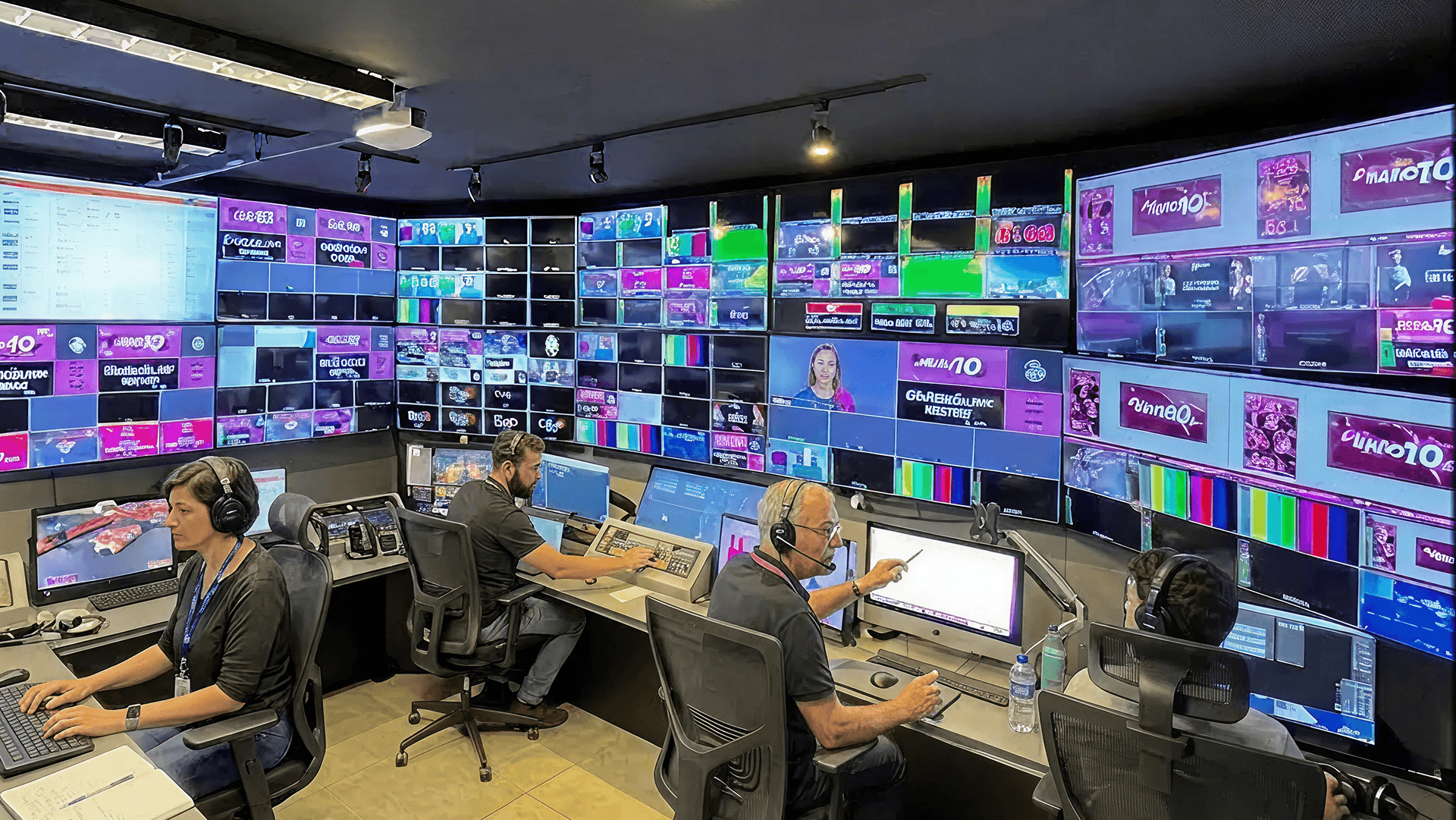
Narrow corridors, cramped spaces between stations, escape routes obstructed by furniture or cables are problems that affect not only comfort but also safety. In an emergency, every second counts, and a lack of adequate circulation can make all the difference.
Furthermore, in day-to-day operations, a technical support team that encounters difficulties accessing equipment or moving between workstations ends up wasting valuable time that could be dedicated to more relevant activities. Accessibility and safety standards exist precisely to avoid these bottlenecks; following them is the first step.
A control room is not static. New screens are incorporated, systems evolve, and operations expand. When the furniture doesn’t keep pace with this growth, the room quickly becomes an improvised environment with exposed cables.
The antidote to this is modular furniture. Structures based on profiles that allow for rearrangement, the addition of monitors, and organized cable routing ensure that the room grows with the operation, without the need for structural renovations for each new piece of equipment.
In practice: the modular consoles by EllanWith their aluminum profiles, they allow for quick reconfiguration and future expansions without complex interventions.
A poorly designed cable infrastructure is more than just an aesthetic problem. It represents electrical hazards, signal interference, and increased downtime whenever maintenance is required.
The solution lies in intelligent cable management: built-in cable trays in the consoles, clamps, separators, and properly sized cable ducts. And, just as important as the physical infrastructure, is keeping the documentation organized so that any future intervention is quick and safe.
In operations that run 24/7, each shift brings operators with different body types, heights, and preferences. When everyone is forced to use the same chair, desk, and monitor settings, the result is widespread discomfort and wasted time at the start of each shift.
Ergonomics here need to be quickly customizable. Workstations with electric height adjustments and monitor mounts with memory allow each operator to recall their preferred configuration with a touch.
It’s an investment that pays for itself quickly in terms of comfort, productivity, and team satisfaction.
In practice: The workbenches with electric adjustment Ellan’s memory system allows each operator to save their ideal position, making shift changes quick and comfortable for everyone.
An efficient control room is the result of an integrated design that considers people, technology, furniture, and the environment as a single system, reducing maintenance costs and preserving the quality of decisions during critical moments.
At Ellan, we combine engineering, ergonomic design, and decades of experience in complex projects to create control environments that truly work.
Do you want to bring this expertise to your control room?
Talk to Ellan and transform your control center into a high-performance environment..


Set up your functional work area
with Ellan technical furniture